
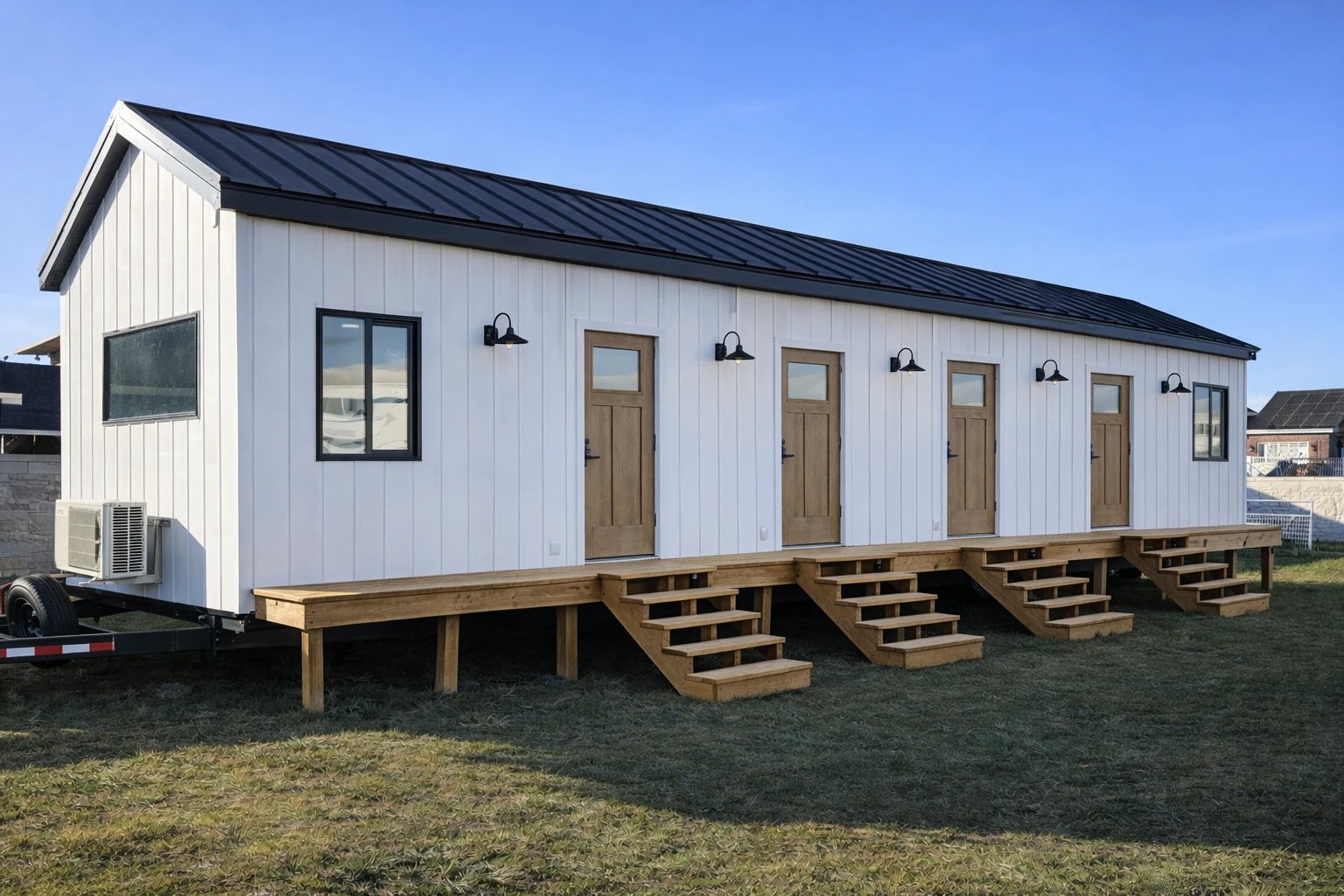
Housing your workforce, solved fast — and not a man camp.
Residential-grade homes, delivered ready and sited as a neighborhood. Housing local communities can actually get behind — it serves your crews through the build, and can leave lasting housing infrastructure behind after you're gone. Scale from a handful of beds to thousands.
A large workforce is coming. The housing isn't there.
Data centers, energy projects, and megaprojects land a workforce a rural market can't absorb. Get housing wrong and you stall the schedule, inflate local rents, and hand the opposition its loudest argument.
Per-month cost of delays when crews can't mobilize on schedule.
Workforce housing — and the "man camp" — is the issue that turns communities against a project.
Per-diem hotels and camps spend millions and leave nothing behind when the build ends.
Size your workforce housing
Pick a layout and your crew size to see units needed and an illustrative cost — to buy, or to run as per-diem housing. Real numbers, your inputs.
Your project
Illustrative estimates based on current base pricing and one worker per private bedroom. Site work (delivery, foundation or pads, utilities, permits) is additional and varies by site. Per-diem revenue shown is gross, before operating costs and occupancy. We'll build you a real, sited quote.
This is not a man camp.
The kind of housing you choose shapes how the community — and your timeline — react.
The classic man camp
- Dorm-style barracks that drive turnover
- Fuels community backlash and NIMBY fights
- Out-of-state operator captures the dollars
- Strains local services, then leaves nothing
- Removed at the end — zero lasting value
Cocoon residential housing
- Private, residential-grade homes that retain talent
- Reads as a neighborhood — communities can get behind it
- Local rents and value stay in the community
- Integrates workers, supports local business
- Can leave lasting housing infrastructure after you leave
Residential feel. Mobile-home flexibility.
Built like a home, delivered like infrastructure — the upside of both, the downside of neither.
Real homes
Residential-built, with the feel and appeal that attracts and keeps quality workers.
Built to adapt
On wheels — so units site flexibly on the ground and keep the adaptability of mobile housing.
Scales fast
From ~50 to 5,000 beds, deployed ahead of labor peaks so housing never stalls the build.
A lasting benefit
Redeploy to the next project, or leave it as housing infrastructure the community benefits from. Never just a sunk cost.
Let's size the housing for your build.
Tell us the project, the workforce, and the timeline. We'll come back with a real, sited quote and a plan to deploy ahead of your labor peak.